Rice Bran Oil Production & Export from Nigeria; The Feasibility Report.
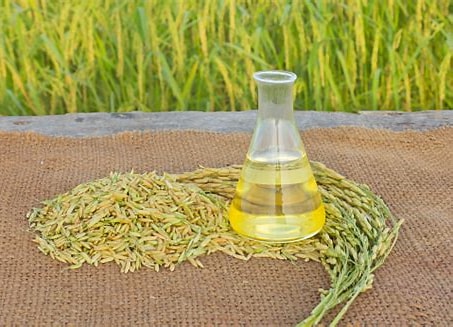
Rice bran oil production represents one of the most promising yet underexploited agro-processing opportunities in Nigeria. Derived from rice bran—the outer layer removed during the milling of rice—rice bran oil has gained increasing global recognition for its nutritional benefits and versatile industrial applications. As the global demand for healthier vegetable oils continues to expand, Nigeria’s growing rice production presents a strong foundation for the development of a viable rice bran oil industry targeting both domestic consumption and export markets.
Rice bran oil is extracted from the bran layer of rice grains, which is removed during the milling of paddy rice. Although historically considered a low-value byproduct of rice processing, rice bran has proven to be a valuable source of high-quality edible oil.
The oil is rich in antioxidants, vitamin E, unsaturated fatty acids, and a unique compound known as oryzanol, which has been linked to lowering cholesterol levels and improving cardiovascular health. Due to these properties, rice bran oil is widely regarded as one of the healthier cooking oils available.
Another key advantage of rice bran oil is its high smoke point, which is typically around 232°C. This makes it highly suitable for high-temperature cooking methods such as deep frying, stir-frying, and sautéing. Its neutral taste also allows it to complement different cuisines without altering the natural flavor of food.
Beyond its culinary applications, rice bran oil has significant uses in other industries. In the cosmetics sector, it is widely used in skincare and haircare products because of its moisturizing and anti-aging properties. Pharmaceutical companies incorporate rice bran oil into dietary supplements and nutraceutical products, while the industrial sector is exploring its potential as a feedstock for biodiesel production.
Rice bran oil is generally classified based on its processing method.
Refined Rice Bran Oil is the most widely used form. It undergoes several processing stages including degumming, neutralization, bleaching, and deodorization. These processes remove impurities, resulting in a clear, stable oil with a longer shelf life that is suitable for cooking and food manufacturing.
Unrefined or Cold-Pressed Rice Bran Oil is produced without extensive chemical processing. As a result, it retains more of its natural nutrients, aroma, and flavor. This type of oil is particularly popular in health-conscious markets and premium cosmetic formulations.
Organic Rice Bran Oil is extracted from rice grown without synthetic fertilizers or pesticides. With the increasing global demand for organic food and personal care products, this category attracts premium pricing in international markets, particularly in Europe and North America.
The global rice bran oil market has experienced consistent growth in recent years, driven by increasing consumer awareness of healthy dietary fats and the rising demand for plant-based oils.
As of 2024, the global rice bran oil market is valued at approximately USD 7.5 billion and is projected to grow to USD 18.3 billion by 2034, representing a compound annual growth rate (CAGR) of about 9.3 percent. This growth is supported by expanding demand from the food industry, cosmetics sector, and pharmaceutical manufacturers.
The Asia-Pacific region currently dominates the global rice bran oil market, accounting for more than 48.2 percent of total market share and generating approximately USD 3.6 billion in revenue in 2024. Countries such as India, China, and Japan lead both production and consumption due to their large-scale rice cultivation and established oil extraction industries.
Nigeria is one of Africa’s largest producers of rice, creating a strong raw material base for rice bran oil production. Rice cultivation in the country dates back centuries and was originally dominated by the indigenous African rice species Oryza glaberrima, which was commonly grown in the Niger Delta and other swampy regions.
The introduction of Asian rice varieties, particularly Oryza sativa, during the 19th century marked a major turning point for the industry. These varieties offered higher yields and greater adaptability across different ecological zones. Over time, Oryza sativa became the dominant rice species cultivated in Nigeria.
Following independence, the Nigerian government prioritized rice production as part of its food security strategy. Several initiatives were introduced to boost output, including the Presidential Initiative on Rice and the Anchor Borrowers’ Programme, launched by the Central Bank of Nigeria in 2015. These programs provided farmers with access to improved seed varieties, credit facilities, and technical support.
As a result of these interventions, rice production has increased significantly. By 2024, Nigeria’s milled rice output was estimated at approximately 5.2 million metric tons, while paddy rice production reached about 8.9 million metric tons. This places Nigeria among the leading rice producers in Africa.
Rice bran typically represents 8 to 10 percent of the total weight of paddy rice processed in mills. Based on Nigeria’s paddy production of approximately 8.9 million metric tons, the country could potentially generate between 700,000 and 890,000 metric tons of rice bran annually.
This large volume of rice bran represents a substantial opportunity for rice bran oil extraction. When processed efficiently, rice bran can yield significant quantities of oil, while the remaining defatted bran can be utilized in animal feed production or as a functional ingredient in food products.
However, rice bran is highly perishable. Once it is separated during milling, enzymes begin breaking down the oil content, causing the bran to turn rancid within a few hours. This makes immediate stabilization and rapid processing essential for maintaining oil quality and maximizing extraction yields.
Despite the large supply of rice bran generated from rice milling, rice bran oil production in Nigeria remains in its early stages of development. Most rice mills currently treat bran as a low-value byproduct, selling it for livestock feed or discarding it altogether.
Only a small number of companies are involved in rice bran oil processing. One example is Rice Field Agri Industries Limited, producers of the Costus Rice brand, which has explored rice bran oil extraction. However, large-scale commercial production remains limited.
In contrast, many Asian countries have developed integrated rice milling systems where bran is stabilized immediately after milling and processed into oil. This approach allows them to maximize the economic value of rice bran and support large-scale rice bran oil industries.
The global shift toward healthier vegetable oils presents significant export potential for rice bran oil producers in Nigeria. With the right processing infrastructure and quality control systems, Nigerian producers could access high-value markets in Europe, North America, and Asia.
In addition to food applications, rice bran oil is gaining popularity in the cosmetics and personal care industry. It is increasingly used in products such as body lotions, facial creams, hair treatments, and anti-aging formulations due to its antioxidant and vitamin-rich composition.
The nutraceutical industry also offers promising opportunities. Extracts from rice bran oil are used in dietary supplements designed to support heart health and cholesterol management.
Rice bran oil production presents a compelling investment opportunity within Nigeria’s agro-processing sector. With substantial rice production and large quantities of rice bran generated annually, Nigeria possesses the raw material base required to develop a thriving rice bran oil industry.
By investing in bran stabilization technologies, modern oil extraction facilities, and integrated rice milling systems, Nigeria can transform rice bran from a low-value byproduct into a high-value export commodity. Such development would not only generate new revenue streams but also strengthen Nigeria’s agro-industrial capacity, create employment opportunities, and enhance the country’s participation in the rapidly growing global market for healthy vegetable oils.
Table of Contents
EXECUTIVE SUMMARY 1.0 Business Overview 1.1 Description of the Business 1.2 Vision and Mission Statement 1.3 Business Objective 1.4 Critical Success Factor of the Business 1.5 Current Status of Business 1.6 Description of the Business Industry 1.7 Contribution to Local and National Economy 2.0 Agricultural Practice 2.1 Seedlings 2.2 Planting 2.3 Manures and Fertilizers 2.4 Weeding and Herbicides 2.5 Climate / Irrigation 2.6 Harvesting and Yield 2.7 Soil Type 2.8 Diseases and Pests 3. Marketing Plan 3.1 Description of the Product 3.2 Product Packaging and Delivery 3.3 The Opportunity 3.4 Pricing Strategy 3.5 Target Market 3.6 Distribution and Delivery Strategy 3.7 Promotional Strategy 3.8 Competition 4. Production Plan 4.1 Description of the Location 4.2 Raw Materials 4.3 Production Equipment 4.4 Production Process 4.5 Production Cost 4.6 Stock Control Process 4.7 Pre-Operating Activities and Expenses 4.7.1 Operating Activities and Expenses 4.8 Project Implementation Schedule 5.0 Organizational and Management Plan 5.1 Ownership of the Business 5.2 Profile of the Promoters 5.3 Key Management Staff 5.3.2 Management Support Units 5.4 Details of Salary Schedule 6. Financial Plan 6.1 Financial Assumption 6.2 Startup Capital Estimation 6.3 Source of Capital 6.4 Security of Loan 6.5 Loan Repayment Plan 6.6 Profit and Loss Statement 6.7 Cash flow Statement 6.8 Viability Analysis 7.0 Business Risks, Mitigation Strategies and SWOT Analysis 7.1 Business Risks and Mitigation Strategies 7.2 SWOT Analysis
Project Specification:
Additional Info
Get this Report
Direct bank transfer
To order the report, Please do pay the sum of ₦350,000 into
Account Name : Foraminifera Market Research Ltd
Account Number : 274 20 569 37
Account Name : Foraminifera Market Research Ltd
Account Number : 101 76 603 95
Account Name : Foraminifera Ventures
Account Number : 011 66 066 32
Make your payment directly into our bank account. Please use your Order ID as the payment reference. Your order will not be shipped until the funds have cleared in our account.
Instructions
After payment call us on 01 -29 52 413 / 08033782777 or email us at foraminiferamarketresearch@yahoo.com with the payment details. After payment confirmation, the soft copy of the report would be sent to you within 24 hours.