Mechanized Rice Cultivation and Sales in Nigeria; The Feasibility Report
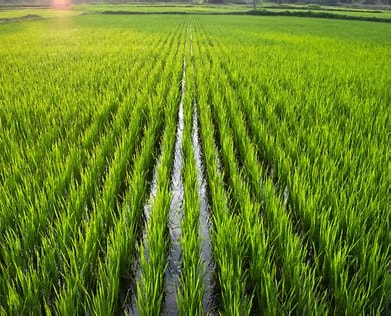
Rice is one of the most important staple foods consumed in Nigeria and across West Africa. It plays a vital role in the country’s food security, nutrition, and agricultural economy. In recent years, the demand for rice has increased significantly due to population growth, urbanization, and changing food preferences. Rice is consumed daily in many households and is commonly used in popular Nigerian dishes such as jollof rice, fried rice, and plain rice served with various sauces and stews.
Despite the rising demand, local rice production has struggled to keep pace with consumption, creating a substantial supply gap that is often filled through imports. This persistent deficit presents a significant opportunity for investors and agribusiness entrepreneurs to invest in mechanized rice cultivation and sales. Mechanized rice farming involves the use of modern agricultural equipment such as tractors, planters, irrigation systems, harvesters, and threshing machines to increase productivity and improve operational efficiency. The adoption of mechanized farming practices allows farmers to cultivate larger land areas, reduce production costs, and improve yields.
Rice is a cereal grain cultivated primarily for human consumption. The crop is grown on flooded or irrigated fields known as paddies and is harvested as paddy rice before undergoing processing to remove the husk and bran layers. After processing, the rice becomes milled rice, which is the form commonly sold in the market. In Nigeria, rice is usually packaged and sold in different bag sizes, particularly in 25 kilogram and 50 kilogram bags for both household consumption and commercial distribution.
Rice cultivation involves several stages that include land preparation, planting, fertilization, weed control, irrigation, harvesting, milling, and packaging. Mechanized rice cultivation replaces manual labor with modern machines in many of these stages, particularly during land preparation, planting, harvesting, and threshing. This approach significantly reduces the time and labor required for farming operations.
Several varieties of rice are produced and sold in Nigeria. These include parboiled rice, polished white rice, brown rice, long-grain rice, and aromatic rice varieties. Local rice brands have become increasingly popular in recent years as improvements in milling technology have enhanced grain quality and reduced impurities.
Nigeria is currently the largest producer of rice in Africa, with production increasing steadily over the last decade due to government interventions and private sector investment in the agricultural sector. Policies aimed at boosting local production, including import restrictions and farmer support programs, have encouraged increased cultivation of rice across the country.
Although production has grown significantly, domestic supply still falls short of national demand. Nigeria produces several million metric tonnes of rice annually, but consumption levels are considerably higher. This gap between supply and demand has created a strong market opportunity for expanded rice farming operations, particularly those using mechanized systems capable of producing higher yields.
Rice cultivation is widely practiced in many parts of the country due to favorable climatic conditions and suitable land availability. Northern Nigeria accounts for a large share of the country’s rice output because of its vast agricultural land and irrigation potential. States such as Kebbi, Kano, Kaduna, Niger, Jigawa, and Adamawa are well known for large-scale rice farming activities. In the southern part of the country, Ebonyi State has gained a reputation as one of the leading producers of high-quality local rice, while states like Benue, Nasarawa, and Taraba also contribute significantly to national production.
The demand for rice in Nigeria continues to grow rapidly due to the country’s expanding population and changing consumption patterns. Rice has become one of the most convenient and preferred staple foods because it is easy to prepare and widely accepted across different cultures and income groups. Urbanization has also contributed to higher consumption levels as more households seek quick and convenient meal options.
Nigeria’s population of over 200 million people creates a massive domestic market for rice. Annual demand is estimated to be close to ten million metric tonnes, while local production meets only a portion of this requirement. The remaining deficit creates strong opportunities for domestic producers to increase production and capture a larger share of the market.
Rice is purchased by a wide range of consumers and businesses including households, hotels, restaurants, caterers, food vendors, rice mills, wholesalers, and food processing companies. The large and diverse market for rice ensures consistent demand throughout the year. This makes mechanized rice cultivation a commercially attractive venture for investors seeking opportunities within Nigeria’s agricultural value chain.
Mechanization plays a critical role in improving agricultural productivity and efficiency. Traditional rice farming in Nigeria often relies heavily on manual labor, which limits farm size and reduces operational efficiency. Mechanized farming addresses these limitations by enabling farmers to carry out farm operations quickly and effectively.
The use of tractors and other machinery for land preparation ensures that fields are properly prepared for planting, leading to improved soil conditions and better crop establishment. Mechanized planting equipment ensures uniform seed placement and optimal plant spacing, which contributes to higher crop yields. Harvesting machines significantly reduce the time required to harvest rice fields and also minimize grain losses that commonly occur during manual harvesting.
Mechanized rice farms are capable of cultivating much larger areas of land compared to traditional farms. This allows farmers to benefit from economies of scale and increased production output. Mechanization also reduces labor costs and helps farmers complete critical farming activities at the right time, which is essential for maximizing crop productivity.
Rice cultivation and sales in Nigeria operate within a regulatory framework designed to promote agricultural development and ensure food safety. Several government agencies play key roles in regulating agricultural activities, supporting farmers, and facilitating agricultural trade.
The Federal Ministry of Agriculture and Food Security provides policy direction and support programs aimed at improving agricultural productivity. Institutions such as the National Agricultural Seed Council regulate seed quality and ensure that farmers have access to improved seed varieties. The Nigeria Agricultural Quarantine Service oversees the movement of agricultural products to prevent the spread of pests and diseases.
Government initiatives such as farmer support programs, agricultural financing schemes, and policies that restrict rice imports have also contributed to the growth of the domestic rice industry. These measures encourage investment in rice farming and create a favorable environment for mechanized agricultural operations.
Despite the strong market opportunities, rice farming in Nigeria is not without its challenges. One of the major obstacles to mechanized farming is the high cost of agricultural machinery, most of which must be imported. This makes it difficult for small and medium-scale farmers to adopt mechanized systems.
Access to affordable financing is another major challenge. Many farmers struggle to obtain the capital required to purchase machinery, irrigation equipment, and other essential farm inputs. Climate variability also poses risks to rice production, as unpredictable rainfall patterns and flooding can damage crops and reduce yields.
In addition, insecurity in certain farming regions can disrupt agricultural activities and discourage investment. Rising prices of fertilizers, improved seeds, and agrochemicals also increase production costs and affect profitability for farmers.
Despite these challenges, the outlook for mechanized rice cultivation in Nigeria remains highly promising. Strong market demand, government support for local agriculture, and the availability of large areas of arable land create favorable conditions for investment in rice farming.
Mechanized rice farms can achieve significantly higher yields than traditional farms when modern farming techniques and improved seed varieties are used. Efficient farm management, irrigation systems, and mechanized harvesting further improve productivity and reduce losses.
Investors in mechanized rice farming can generate revenue not only from the sale of paddy rice but also from the processing and sale of milled rice. Additional income can be derived from by-products such as rice bran and husks, which are used in animal feed production and other industrial applications.
Mechanized rice cultivation and sales represent a viable and profitable agricultural investment opportunity in Nigeria. The country’s large population and growing demand for rice create a substantial market for local producers. Although challenges such as high equipment costs and limited access to financing exist, the adoption of mechanized farming systems offers significant advantages in terms of productivity, efficiency, and profitability.
With adequate planning, modern farming equipment, and effective market distribution strategies, mechanized rice farming can contribute significantly to Nigeria’s food security while generating sustainable returns for investors and agricultural entrepreneurs.
Table of Contents
Table of Contents: EXECUTIVE SUMMARY 1.0 Business Overview 1.1 Description of the Business 1.2 Vision and Mission Statement 1.3 Business Objective 1.4 Critical Success Factor of the Business 1.5 Current Status of Business 1.6 Description of the Business Industry 1.7 Contribution to Local and National Economy 2.0 Agricultural Practice 2.1 Seedlings 2.2 Planting 2.3 Manures and Fertilizers 2.4 Weeding and Herbicides 2.5 Climate / Irrigation 2.6 Harvesting and Yield 2.7 Soil Type 2.8 Diseases and Pests 3. Marketing Plan 3.1 Description of the Product 3.2 Product Packaging and Delivery 3.3 The Opportunity 3.4 Pricing Strategy 3.5 Target Market 3.6 Distribution and Delivery Strategy 3.7 Promotional Strategy 3.8 Competition 4. Production Plan 4.1 Description of the Location 4.2 Raw Materials 4.3 Production Equipment 4.4 Production Process 4.5 Production Cost 4.6 Stock Control Process 4.7 Pre-Operating Activities and Expenses 4.7.1 Operating Activities and Expenses 4.8 Project Implementation Schedule 5.0 Organizational and Management Plan 5.1 Ownership of the Business 5.2 Profile of the Promoters 5.3 Key Management Staff 5.3.2 Management Support Units 5.4 Details of Salary Schedule 6. Financial Plan 6.1 Financial Assumption 6.2 Startup Capital Estimation 6.3 Source of Capital 6.4 Security of Loan 6.5 Loan Repayment Plan 6.6 Profit and Loss Statement 6.7 Cash flow Statement 6.8 Viability Analysis 7.0 Business Risks, Mitigation Strategies and SWOT Analysis 7.1 Business Risks and Mitigation Strategies 7.2 SWOT Analysis
Project Specification:
Additional Info
Get this Report
Direct bank transfer
To order the report, Please do pay the sum of ₦150,000 into
Account Name : Foraminifera Market Research Ltd
Account Number : 274 20 569 37
Account Name : Foraminifera Market Research Ltd
Account Number : 101 76 603 95
Account Name : Foraminifera Ventures
Account Number : 011 66 066 32
Make your payment directly into our bank account. Please use your Order ID as the payment reference. Your order will not be shipped until the funds have cleared in our account.
Instructions
After payment call us on 01 -29 52 413 / 08033782777 or email us at foraminiferamarketresearch@yahoo.com with the payment details. After payment confirmation, the soft copy of the report would be sent to you within 24 hours.