Feasibility Report on Odourless Fufu Flour Production in Nigeria
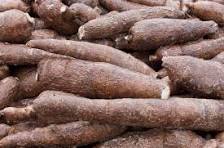
Fufu is one of the most widely consumed traditional foods in Nigeria, particularly in the southern and central regions, where it forms a staple part of daily diets. Traditionally prepared from fermented cassava, yam, or plantain, fufu is known for its smooth, elastic texture and high carbohydrate content. Among these, cassava-based fufu is the most popular due to the crop’s abundance, affordability, and year-round availability.
However, traditional fufu production results in a wet, highly perishable product with a characteristic strong fermented odor and a short shelf life, limiting its commercial distribution and modern market potential.
Odourless fufu flour is a processed and shelf-stable form of fufu that preserves the nutritional and sensory qualities of traditional fufu while eliminating the undesirable fermented smell. Produced from high-quality cassava tubers, odourless fufu flour is dry, easy to package, transport, and store, and can be reconstituted with water to produce ready-to-eat fufu. Its smooth texture, uniform consistency, and extended shelf life make it attractive for both household consumers and industrial buyers. The product is particularly suitable for urban centers where convenience, hygiene, and storage stability are key considerations.
Nigeria produces over 62 million tonnes of cassava annually, securing its position as the world’s largest producer. Despite this, the processing of cassava into value-added products such as fufu flour remains limited, and much of the domestic consumption still relies on traditional wet fufu. The production of odourless fufu flour addresses key challenges in the cassava value chain, including post-harvest losses, limited shelf life, and restricted market access, while creating economic opportunities for farmers, processors, and investors.
The production process of odourless fufu flour begins with the selection of high-quality cassava tubers, free from microbial or insect damage, and processed within two days of harvest to preserve starch quality. The tubers are peeled, washed, and cut into pieces before being soaked or steeped in clean water for 3–4 days to ferment naturally. Unlike traditional fufu, the fermentation process is controlled and optimized to remove the characteristic odor while retaining nutritional value. The fermented mash is then sieved or pounded to remove fibers, and the extracted starch is dried to a moisture content below 10 percent. The dried product is milled into fine flour and packaged in moisture-proof materials, making it shelf-stable and convenient for both retail and bulk industrial use.
The domestic demand for fufu in Nigeria is high, with annual consumption estimated at 350,000 tonnes, while supply is only about 300,000 tonnes, creating a persistent gap that odourless fufu flour production can help fill. Urbanization, population growth, and rising incomes have also expanded the market for convenient, ready-to-prepare foods, further increasing the appeal of odourless fufu flour. In addition to household consumption, odourless fufu flour is used in hotels, restaurants, catering services, and packaged food manufacturers, creating multiple market channels.
Odourless fufu flour production offers significant economic and social benefits. By providing farmers with a reliable market for high-quality cassava tubers, it encourages improved farming practices and reduces post-harvest losses. The processing operations create employment opportunities in rural and peri-urban areas, particularly for women and youth, while industrializing a traditional staple contributes to Nigeria’s non-oil economic diversification. Furthermore, the product’s shelf stability and hygienic packaging make it suitable for export to West African and other African markets where Nigerian fufu is culturally preferred.
The feasibility of establishing an odourless fufu flour processing facility in Nigeria is strengthened by the availability of raw materials, growing domestic demand, and relatively simple production technology. While initial capital investment is required for processing equipment, drying systems, milling, and packaging lines, the project promises sustainable returns due to high market demand and relatively low input costs. Gradual scaling of operations ensures operational efficiency and product consistency, while adherence to quality and hygiene standards enhances market acceptance.
Odourless fufu flour represents a strategically important value-added product in Nigeria’s cassava sector. Its production addresses critical issues of perishability, convenience, and market expansion, while offering a reliable source of income for farmers and processors. With rising urban demand, expanding industrial applications, and export potential, odourless fufu flour production is a commercially viable, socially impactful, and sustainable agribusiness opportunity in Nigeria.
Table of Contents
Table of Contents: EXECUTIVE SUMMARY 1.0 Business Overview 1.1 Description of the Business 1.2 Vision and Mission Statement 1.3 Critical Success Factor of the Business 1.4Current Status of Business 1.5 Description of the Business Industry 1.6 Contribution to Local and National Economy 2. Marketing Plan 2.1 Description of the Product 2.2 Product Packaging and Delivery 2.3 The Opportunity 2.4 Pricing Strategy 2.5 Target Market 2.6 Distribution and Delivery Strategy 2.7 Promotional Strategy 2.8 Competition 3. Production Plan 3.1 Description of the Location 3.2 Raw Materials 3.3 Production Equipment 3.4 Production Process 3.5 Production Cost 3.6 Stock Control Process 3.7 Pre-Operating Activities and Expenses 3.7.1 Operating Activities and Expenses 3.8 Project Implementation Schedule 4.0 Organizational and Management Plan 4.1 Ownership of the Business 4.2 Profile of the Promoters 4.3 Key Management Staff 4.3.2 Management Support Units 4.4 Details of Salary Schedule 5. Financial Plan 5.1 Financial Assumption 5.2 Start Up Capital Estimation 5.3 Source of Capital 5.4 Security of Loan 5.5 Loan Repayment Plan 5.6 Profit and Loss Analysis 5.7 Cash flow Analysis 5.8 Viability Analysis 6.0 Business Risks, Mitigation Strategies and SWOT Analysis 6.1 Business Risks and Mitigation Strategies 6.2 SWOT Analysis
Project Specification:
Additional Info
Get this Report
Direct bank transfer
To order the report, Please do pay the sum of ₦100,000 into
Account Name : Foraminifera Market Research Ltd
Account Number : 274 20 569 37
Account Name : Foraminifera Market Research Ltd
Account Number : 101 76 603 95
Account Name : Foraminifera Ventures
Account Number : 011 66 066 32
Make your payment directly into our bank account. Please use your Order ID as the payment reference. Your order will not be shipped until the funds have cleared in our account.
Instructions
After payment call us on 01 -29 52 413 / 08033782777 or email us at foraminiferamarketresearch@yahoo.com with the payment details. After payment confirmation, the soft copy of the report would be sent to you within 24 hours.