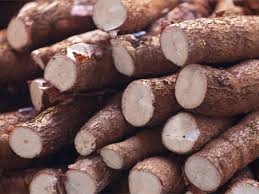
Feasibility Report on Cassava Tuber Cultivation and Production of Cassava Flour in Nigeria
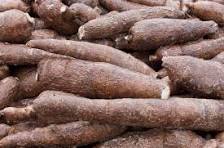
Cassava (Manihot esculenta) is Nigeria’s most important root crop, serving as both a staple food for millions of households and a vital source of income for smallholder farmers and processors in rural areas. Its adaptability to diverse soil types, low input requirements, and resilience in marginal climates make it a cornerstone of Nigeria’s food security and rural economy. Beyond its traditional role as a food crop, cassava holds enormous potential for industrial processing, yet its utilization in value-added products has historically been limited.
Nigeria is the largest producer of cassava in the world, with recent estimates indicating an annual output of more than 62 million tonnes, surpassing the production of any other country. Despite this impressive output, the crop is highly perishable due to its high water content, which accounts for approximately 55 percent of its weight. Fresh cassava roots typically deteriorate within a few days after harvest, resulting in significant post-harvest losses. Processing cassava into shelf-stable products such as cassava flour not only mitigates these losses but also adds value, creates employment, and strengthens industrial supply chains.
Cassava flour is a fine, dry powder produced from peeled, washed, grated, and dried cassava roots. It is gluten-free, rich in carbohydrates, and versatile in both industrial and domestic applications. In the food sector, cassava flour is used in baking, confectionery, noodles, and snacks, either as a full substitute for wheat flour or blended with it, reducing dependency on imported wheat. Beyond food applications, cassava flour is employed in industries such as paperboard and plywood production, where it serves as a binder or adhesive, and in textiles as a thickening and sizing agent. The flour’s functional properties, combined with its gluten-free nature, also make it suitable for infant foods, health-oriented products, and specialty diets.
The global cassava flour market has expanded in recent years, driven by growing awareness of gluten-free diets, demand for natural food ingredients, and industrial applications of cassava starch. In 2025, the global market was valued at approximately USD 1.2 billion and is projected to reach nearly USD 1.8 billion by 2030, growing at a compound annual rate of 7 to 8 percent. Nigeria itself presents a strong domestic market, supported by government policies promoting the use of cassava-wheat composite flour in bread production, which has created additional demand for high-quality cassava flour. Current national demand for cassava flour is estimated at 750,000 tonnes per year, yet domestic production accounts for only around 50,000 tonnes, highlighting a substantial supply gap and an opportunity for commercial investors.
Producing cassava flour on a commercial scale requires a reliable supply of high-quality cassava tubers, free from microbial or insect damage and processed within two days of harvest to maintain starch quality. Modern production involves peeling, washing, grating or milling, pressing to remove excess water, drying to achieve a low moisture content, and milling into a uniform powder. When packaged in moisture-proof materials, the resulting flour is shelf-stable, easy to transport, and suitable for both industrial and retail markets. Integrating large-scale cassava cultivation with a processing facility enhances supply consistency and reduces production risks. For example, a farm spanning several thousand hectares can supply a plant capable of processing over a thousand tonnes of cassava per day, yielding several hundred tonnes of flour at full capacity. Operational scaling typically begins at a moderate utilization rate in the first year and gradually increases over time as the market absorbs the product and operational efficiency improves.
The feasibility of investing in cassava flour production in Nigeria is strengthened by multiple factors. Nigeria’s abundant raw material supply ensures continuity of operations and cost-efficiency. Government policies supporting import substitution and local production create a favorable regulatory environment. The steadily growing domestic population and urbanization trends ensure sustained demand, while regional export opportunities in West Africa provide additional market potential. The versatility of cassava flour across food and industrial applications guarantees multiple revenue streams, reducing business risk.
Cassava flour production represents a strategically important and economically viable investment in Nigeria. By converting a highly perishable staple into a shelf-stable, industrially versatile product, investors can achieve sustainable financial returns while supporting rural livelihoods, enhancing food security, and contributing to Nigeria’s industrial diversification. With expanding domestic consumption, growing industrial use, and the country’s global leadership in cassava production, the sector offers significant potential for long-term growth and profitability.
Table of Contents
EXECUTIVE SUMMARY 1.0 Business Overview 1.1 Description of the Business 1.2 Vision and Mission Statement 1.3 Value Proposition 1.4 Critical Success Factor of the Business 1.5 Current Status of Business 1.6 Description of the Business Industry 1.7 Contribution to Local and National Economy 2.0 Agricultural Practice 2.1.0 Collection of stems 2.1.1 Planting 2.1.2 Manures and Fertilizers 2.1.3 Weeding 2.1.4 Climate / Irrigation 2.1.5 Harvesting and Yield 2.1.5.1 Herbicides 2.2 Factors of Production/ Cultivation 2.2.1 Soil Type 2.2.2 Diseases and Pests 3. Marketing Plan 3.1 Description of product 3.2 Product Packaging and delivery 3.3 The Opportunity 3.4 Pricing Strategy 3.5 Target Market 3.6 Distribution and Delivery Strategy 3.7 Promotional Strategy 3.8 Competition 4. Production Plan 4.1 Description of the Location 4.2 Raw Materials 4.3 Production Equipment 4.4 Production Process 4.5 Production Cost 4.6 Stock Control Process 4.7 Pre-Operating activities and expenses 4.7.1 Operating Activities and Expenses 4.8 Project Implementation Schedule 5.0 Organizational and Management Plan 5.1 Ownership of the business 5.2 Profile of the promoters 5.3 Key Management Staff 5.3.2 Management Support Units 5.4 Details of salary schedule 6. Financial Plan 6.1 Financial Assumption 6.2 Start – Up Capital Estimation 6.3 Source of Capital 6.4 Security of Loan 6.5 Loan Repayment Plan 6.6 Profit and Loss Analysis 6.7 Cash Flow Statement 6.8 Viability Analysis 7.0 Business Risk and mitigation factor 7.1 Business Risks 7.2 SWOT Analysis
Project Specification:
Additional Info
Get this Report
Direct bank transfer
To order the report, Please do pay the sum of ₦850,000 into
Account Name : Foraminifera Market Research Ltd
Account Number : 274 20 569 37
Account Name : Foraminifera Market Research Ltd
Account Number : 101 76 603 95
Account Name : Foraminifera Ventures
Account Number : 011 66 066 32
Make your payment directly into our bank account. Please use your Order ID as the payment reference. Your order will not be shipped until the funds have cleared in our account.
Instructions
After payment call us on 01 -29 52 413 / 08033782777 or email us at foraminiferamarketresearch@yahoo.com with the payment details. After payment confirmation, the soft copy of the report would be sent to you within 24 hours.