Feasibility Report on Cassava Starch, Flour, and Garri Production in Nigeria
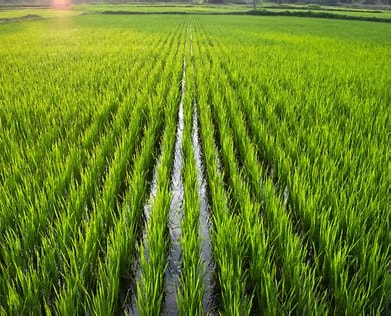
Cassava (Manihot esculenta) is Nigeria’s most important root crop and a cornerstone of food security, rural livelihoods, and agribusiness development. It is widely cultivated across 24 of Nigeria’s 36 states, supplying both rural and urban households with staple food while also serving as a major source of income for millions of smallholder farmers. Nigeria is the world’s largest producer of cassava, with annual output exceeding 62 million tonnes, providing a reliable raw material base for both domestic consumption and industrial processing.
Despite its abundance, the processing of cassava into value-added products such as starch, flour, and garri has historically been limited. Traditional consumption focuses on wet fufu and locally processed garri, which while nutritionally valuable, are highly perishable and limit market reach. Developing industrial-scale processing facilities for cassava starch, flour, and garri addresses post-harvest losses, extends shelf life, and creates multiple opportunities for employment, rural income generation, and industrial growth.
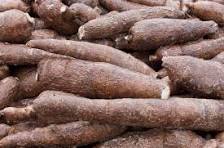
Cassava starch is a fine, whitish powder extracted from cassava tubers through peeling, washing, milling, and drying. It is primarily composed of carbohydrates and is highly versatile, with applications in the food industry as a thickener and binder, in textiles as a yarn sizer and finishing agent, and in paper, plywood, and adhesive production. Globally, approximately 60 million tonnes of starch are produced annually from roots, tubers, and cereals, with cassava contributing around 10 percent. In Nigeria, domestic demand for cassava starch exceeds 350,000 tonnes per year, but local supply meets only a fraction of this, leaving significant opportunities for commercial production.
Cassava flour is produced by drying and milling peeled and washed cassava tubers. It is dry, gluten-free, and shelf-stable, making it suitable for both household and industrial use. Cassava flour is increasingly being adopted as a substitute or partial replacement for imported wheat flour, particularly in bread and confectionery production, in line with government policies promoting cassava-wheat composite flour. This has created a growing domestic market, supported by Nigeria’s urbanization, rising incomes, and population growth of over 220 million people, with an annual growth rate of 3.5 percent.
Garri, on the other hand, is a granular, fermented, and roasted cassava product that is one of Nigeria’s most popular staples. It is consumed widely across all social and economic strata and is valued for its long shelf life, convenience, and affordability. Traditional garri processing involves peeling, grating, fermenting, pressing, sieving, and roasting, producing a granular product with low moisture content, making it durable and transportable. While garri is primarily consumed domestically, the product also has export potential in West African markets where Nigerian garri is preferred.
The production of starch, flour, and garri requires a consistent supply of high-quality cassava tubers, processed shortly after harvest to maintain starch content and prevent deterioration. Modern processing technologies improve efficiency, reduce losses, and enhance product quality. A large-scale cassava processing facility can integrate the production of starch, flour, and garri, maximizing value extraction from raw tubers while generating multiple product lines for different market segments. For instance, a plant processing 1,200 tonnes of cassava per day can simultaneously produce hundreds of tonnes of starch, flour, and garri daily, catering to both industrial and household markets.
Economically, cassava processing is highly viable due to the abundance of raw materials, strong domestic demand, and export potential. Government policies promoting import substitution, particularly for wheat flour, support domestic production of cassava flour, while industrial applications of cassava starch in adhesives, paper, textiles, and ethanol provide additional revenue streams. Garri continues to dominate domestic consumption and offers opportunities for rural employment and income generation. By integrating modern processing techniques with efficient supply chain management, investors can achieve sustainable returns while supporting rural livelihoods.
The production of cassava starch, flour, and garri in Nigeria represents a strategically important and commercially viable venture. It addresses critical issues of post-harvest loss, food security, and industrial supply gaps while providing multiple value-added products for domestic and regional markets.
By leveraging Nigeria’s abundant cassava resources, modern processing technologies, and strong market demand, cassava processing can serve as a catalyst for rural development, non-oil foreign exchange earnings, and the growth of Nigeria’s agro-industrial sector.
Table of Contents
Table of Contents: EXECUTIVE SUMMARY 1.0 Business Overview 1.1 Description of the Business 1.2 Vision and Mission Statement 1.3 Critical Success Factor of the Business 1.4Current Status of Business 1.5 Description of the Business Industry 1.6 Contribution to Local and National Economy 2. Marketing Plan 2.1 Description of the Product 2.2 Product Packaging and Delivery 2.3 The Opportunity 2.4 Pricing Strategy 2.5 Target Market 2.6 Distribution and Delivery Strategy 2.7 Promotional Strategy 2.8 Competition 3. Production Plan 3.1 Description of the Location 3.2 Raw Materials 3.3 Production Equipment 3.4 Production Process 3.5 Production Cost 3.6 Stock Control Process 3.7 Pre-Operating Activities and Expenses 3.7.1 Operating Activities and Expenses 3.8 Project Implementation Schedule 4.0 Organizational and Management Plan 4.1 Ownership of the Business 4.2 Profile of the Promoters 4.3 Key Management Staff 4.3.2 Management Support Units 4.4 Details of Salary Schedule 5. Financial Plan 5.1 Financial Assumption 5.2 Start Up Capital Estimation 5.3 Source of Capital 5.4 Security of Loan 5.5 Loan Repayment Plan 5.6 Profit and Loss Analysis 5.7 Cash flow Analysis 5.8 Viability Analysis 6.0 Business Risks, Mitigation Strategies and SWOT Analysis 6.1 Business Risks and Mitigation Strategies 6.2 SWOT Analysis
Project Specification:
Additional Info
Get this Report
Direct bank transfer
To order the report, Please do pay the sum of ₦350,000 into
Account Name : Foraminifera Market Research Ltd
Account Number : 274 20 569 37
Account Name : Foraminifera Market Research Ltd
Account Number : 101 76 603 95
Account Name : Foraminifera Ventures
Account Number : 011 66 066 32
Make your payment directly into our bank account. Please use your Order ID as the payment reference. Your order will not be shipped until the funds have cleared in our account.
Instructions
After payment call us on 01 -29 52 413 / 08033782777 or email us at foraminiferamarketresearch@yahoo.com with the payment details. After payment confirmation, the soft copy of the report would be sent to you within 24 hours.