Feasibility Report on Cassava-Based Adhesive Production in Nigeria
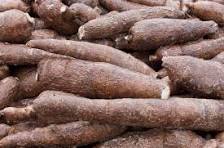
Cassava (Manihot esculenta) is Nigeria’s most abundant and widely cultivated root crop, providing not only a staple food for millions of households but also serving as a critical source of income for rural farmers and processors. Nigeria is the world’s largest producer of cassava, with annual production exceeding 62 million tonnes, ensuring an abundant and reliable supply of raw material for industrial applications. Despite its importance as a food crop, the industrial utilization of cassava remains underdeveloped, presenting significant opportunities for value addition through processing into products such as starch, flour, ethanol, and adhesives.
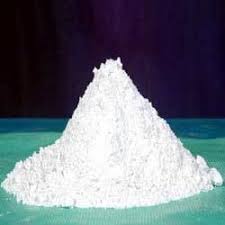
Cassava-based adhesive is a natural, eco-friendly product derived from the starch extracted from cassava tubers. Adhesives are substances capable of binding or holding materials together, and in industrial contexts, they are widely used in the production of plywood, paperboard, packaging, stamps, textiles, and certain food and pharmaceutical applications. The use of cassava starch as a primary raw material in adhesive production offers a cost-effective, biodegradable, and environmentally sustainable alternative to synthetic adhesives, which often rely on petroleum derivatives and other non-renewable resources.
The production process of cassava-based adhesive begins with the selection of high-quality cassava tubers, free from microbial or insect damage and processed shortly after harvest to preserve starch integrity. The cassava is peeled, washed, and milled into a mash, and the starch is extracted and purified. The extracted starch is then formulated with additives, including water, resins, or other natural thickeners, to produce a stable adhesive suitable for industrial use. The resulting product is odourless, non-toxic, and capable of providing strong bonding performance for a variety of substrates, including paper, wood, and textiles.
The domestic demand for adhesives in Nigeria is substantial. With a population exceeding 220 million and ongoing industrial growth in construction, packaging, furniture, and printing sectors, the country consumes over 350,000 tonnes of adhesives annually, yet the majority of this demand is met through imports. Local production currently accounts for only a small fraction of total consumption, leaving a significant market gap for cassava-based alternatives. The adoption of cassava-based adhesives not only reduces import dependence but also stimulates rural economic activity by creating additional demand for cassava tubers and supporting smallholder farmers.
Cassava-based adhesives offer significant advantages over conventional synthetic adhesives. They are biodegradable, reducing environmental pollution associated with petrochemical-based adhesives, and they are renewable, drawing on the abundant cassava supply in Nigeria. Moreover, the production technology is relatively simple, and much of the equipment can be fabricated locally, lowering initial capital costs and making it feasible for small and medium-scale enterprises. Different formulations can be developed to meet specific industrial requirements, ranging from water-resistant adhesives for plywood and paperboard to fast-setting adhesives for packaging and labeling.
From a financial perspective, cassava-based adhesive production is highly viable due to the combination of low-cost raw materials, strong domestic demand, and export potential. Nigeria’s policy emphasis on import substitution and industrialization further enhances the investment climate.
Establishing an adhesive production facility allows for integration with cassava farms and starch production, ensuring a steady supply of raw materials while reducing operational costs. By operating at optimal capacity, the plant can achieve economies of scale, lower per-unit production costs, and generate competitive pricing for industrial buyers.
In addition to adhesives, the cassava processing chain produces valuable by-products, including high-quality starch and residual fibrous matter, which can be used in animal feed or as biomass for energy generation. These by-products enhance overall profitability and resource efficiency, reinforcing the sustainability of the enterprise.
Cassava-based adhesive production in Nigeria represents a strategically important and economically viable venture. It leverages abundant local resources, addresses a substantial market gap, and provides a sustainable alternative to synthetic adhesives.
Table of Contents
Table of Contents: EXECUTIVE SUMMARY 1.0 Business Overview 1.1 Description of the Business 1.2 Vision and Mission Statement 1.3 Critical Success Factor of the Business 1.4Current Status of Business 1.5 Description of the Business Industry 1.6 Contribution to Local and National Economy 2. Marketing Plan 2.1 Description of the Product 2.2 Product Packaging and Delivery 2.3 The Opportunity 2.4 Pricing Strategy 2.5 Target Market 2.6 Distribution and Delivery Strategy 2.7 Promotional Strategy 2.8 Competition 3. Production Plan 3.1 Description of the Location 3.2 Raw Materials 3.3 Production Equipment 3.4 Production Process 3.5 Production Cost 3.6 Stock Control Process 3.7 Pre-Operating Activities and Expenses 3.7.1 Operating Activities and Expenses 3.8 Project Implementation Schedule 4.0 Organizational and Management Plan 4.1 Ownership of the Business 4.2 Profile of the Promoters 4.3 Key Management Staff 4.3.2 Management Support Units 4.4 Details of Salary Schedule 5. Financial Plan 5.1 Financial Assumption 5.2 Start Up Capital Estimation 5.3 Source of Capital 5.4 Security of Loan 5.5 Loan Repayment Plan 5.6 Profit and Loss Analysis 5.7 Cash flow Analysis 5.8 Viability Analysis 6.0 Business Risks, Mitigation Strategies and SWOT Analysis 6.1 Business Risks and Mitigation Strategies 6.2 SWOT Analysis
Project Specification:
Additional Info
Get this Report
Direct bank transfer
To order the report, Please do pay the sum of ₦100,000 into
Account Name : Foraminifera Market Research Ltd
Account Number : 274 20 569 37
Account Name : Foraminifera Market Research Ltd
Account Number : 101 76 603 95
Account Name : Foraminifera Ventures
Account Number : 011 66 066 32
Make your payment directly into our bank account. Please use your Order ID as the payment reference. Your order will not be shipped until the funds have cleared in our account.
Instructions
After payment call us on 01 -29 52 413 / 08033782777 or email us at foraminiferamarketresearch@yahoo.com with the payment details. After payment confirmation, the soft copy of the report would be sent to you within 24 hours.