Business Plan on Refining, Bleaching, Deodorizing and Packaging of Palm Kernel Oil in Nigeria

Published - 20 Mar, 2026| Analyst - Foraminifera Market Research Limited| Code - fora/2026/lipubssnes/51006

Select Report Format

Subtotal 350,000

Best Price Guaranteed*

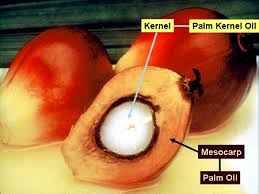
Palm kernel oil refining, bleaching, deodorizing, and packaging represent a critical and highly profitable segment of the agro-processing industry in Nigeria. Palm kernel oil (PKO), derived from the kernel of the oil palm fruit, is a valuable industrial and edible oil widely used in the production of soaps, detergents, cosmetics, pharmaceuticals, and specialty food products.

However, crude palm kernel oil (CPKO) extracted locally often contains impurities, free fatty acids, pigments, and odour, making it unsuitable for direct industrial or consumer use. This creates a strong need for refining and value addition through modern processing.

Nigeria is one of the leading producers of oil palm in Africa, with significant cultivation across the southern belt, particularly in Edo State, Delta State, Akwa Ibom State, Cross River State, and Rivers State. These regions produce large volumes of crude palm kernel oil annually through both smallholder and industrial processing systems. Despite this availability, a significant portion of locally produced oil is either consumed in crude form or sold at lower value due to the absence of adequate refining capacity.

Refined palm kernel oil is produced through a series of processing stages collectively known as refining, bleaching, and deodorizing (RBD). The refining stage removes free fatty acids and impurities, the bleaching stage eliminates color pigments and trace contaminants, while deodorizing removes odours and volatile compounds to produce a clear, stable, and neutral oil. The final product is a high-quality oil that meets industrial and food-grade standards and is suitable for packaging and distribution to end users.

The demand for refined palm kernel oil in Nigeria is strong and continues to grow. The country’s expanding population—now estimated at over 220 million people—alongside rapid urbanization and industrialization, has significantly increased the consumption of processed goods that rely on vegetable oils as key inputs. Industries such as soap and detergent manufacturing, cosmetics production, food processing, and pharmaceuticals all depend heavily on refined palm kernel oil. In addition, Nigeria’s edible oil market, valued at several billion dollars annually, still relies partly on imports, creating a clear opportunity for local producers to fill the gap.

This feasibility report examines the establishment of a palm kernel oil refining and packaging plant with an installed capacity of 10–20 tonnes per day, depending on the scale of investment. The plant would operate for approximately 300 working days per year, sourcing crude palm kernel oil from local producers and processors. The refining line will incorporate modern equipment for neutralization, bleaching, deodorization, and filtration, ensuring the production of high-quality refined oil that meets both local and export standards.

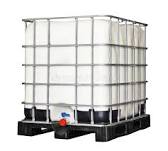
The packaging segment of the operation adds significant value by enabling the product to be sold directly to wholesalers, retailers, and end consumers in various sizes, including bulk containers and smaller retail packs. This enhances brand visibility, improves profit margins, and allows the business to compete effectively in both industrial and consumer markets.

From a financial perspective, the project offers strong profitability potential due to the high demand for refined oils, multiple market segments, and the relatively low cost of sourcing crude palm kernel oil locally. Profit margins are further enhanced by efficient processing, economies of scale, and effective distribution strategies. With proper management, the business can achieve stable returns and a competitive position in the market.

Beyond financial returns, the project contributes to Nigeria’s economic development by promoting value addition within the oil palm value chain, reducing dependence on imported refined oils, and creating employment opportunities. It also supports rural economies by providing a reliable market for smallholder producers of palm kernel oil.

The refining, bleaching, deodorizing, and packaging of palm kernel oil in Nigeria present a highly viable and sustainable investment opportunity. With abundant raw materials, strong and growing demand, and clear gaps in local refining capacity, the project is well-positioned to deliver attractive returns while contributing to the growth and modernization of Nigeria’s agro-industrial sector.

Table of Contents

EXECUTIVE SUMMARY 1.0 Business Overview 1.1 Description of the Business 1.2 Vision and Mission Statement 1.3 Business Objective 1.4 Critical Success Factor of the Business 1.5 Current Status of Business 1.6 Description of the Business Industry 1.7 Contribution to Local and National Economy 2. Marketing Plan 2.1 Description of the Products 2.2 Product Packaging and Delivery 2.3 The Opportunity 2.4 Pricing Strategy 2.5Target Market 2.6 Distribution and Delivery Strategy 2.7 Promotional Strategy 2.8 Competition 3. Production Plan 3.1 Operational Details and Structure 3.2 Raw Materials 3.3 Machinery and Equipment Requirement 3.4 Description of the Location 3.5 Housing 3.6 Infrastructural Requirement 3.7 Transportation 3.8 Direct Cost 3.9 Pre-Operating Activities and Expenses 3.9.1 Operating Activities and Expenses 3.10Project Implementation Schedule 4.0 Organizational and Management Plan 4.1 Ownership of the Business 4.2 Profile of the Promoters 4.3 Key Management Staff 4.3.2 Management Support Units 4.4 Details of Salary Schedule 5. Financial Plan 5.1 Financial Assumption 5.2 Start - Up Capital Estimation 5.3 Source of Capital 5.4 Security of Loan 5.5 Loan Repayment Plan 5.6 Profit and Loss Analysis 5.7 Cash flow Analysis 5.8 Viability Analysis 6.0 Business Risks, Mitigation Strategies and SWOT Analysis 6.1 Business Risks and Mitigation Strategies 6.2 SWOT Analysis

Project Specification:

Plant Capacity: 10 tons per day
Capacity Utilization: Eighty percent (80%)
Loan Tenor: Sixty (60) Months
Interest Rate: Twenty-five percent (25%)
Moratorium: Twelve (12) months

Additional Info

Report Type: feasibility report
Formats of Delivery:
No. of Pages: 60 pages (text part) & 6 pages (excel part)
Report Code: fora/2026/lipubssnes/51006
Publisher: Foraminifera Market Research Limited
Price: ₦350,000
Release Date: 20 Mar, 2026 Updated quarterly.
Language: English
Delivery time: Within twenty-four (24) hours.

Get this Report

Direct bank transfer

To order the report, Please do pay the sum of ₦350,000 into

Bank Name : Eco Bank Plc
Account Name : Foraminifera Market Research Ltd
Account Number : 274 20 569 37
Bank Name : United Bank for Africa (UBA)
Account Name : Foraminifera Market Research Ltd
Account Number : 101 76 603 95
Bank Name : Guaranty Trust Bank Plc (GTB)
Account Name : Foraminifera Ventures
Account Number : 011 66 066 32

Make your payment directly into our bank account. Please use your Order ID as the payment reference. Your order will not be shipped until the funds have cleared in our account.

Instructions

After payment call us on 01 -29 52 413 / 08033782777 or email us at foraminiferamarketresearch@yahoo.com with the payment details. After payment confirmation, the soft copy of the report would be sent to you within 24 hours.