Business Plan on Monazite Mining, Beneficiation and Export from Nigeria
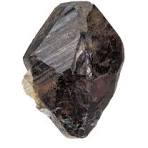
Monazite ore, a rare earth phosphate mineral rich in cerium, lanthanum, neodymium, and thorium, is increasingly emerging as a strategic resource in the global transition toward clean energy and advanced manufacturing. With rising demand for rare earth elements (REEs) used in electric vehicles, wind turbines, electronics, and defense technologies, countries with substantial untapped deposits—such as Nigeria—are gaining attention as potential supply hubs.
Globally, the monazite market is experiencing steady growth. Valued at approximately $1.8 billion in 2025, it is projected to reach $3.4 billion by 2034, expanding at a compound annual growth rate (CAGR) of 7.3%. This growth is driven by the accelerating clean energy transition, efforts to diversify global rare earth supply chains, and increasing demand for compact and high-performance electronic devices.
Monazite sand remains the dominant product segment, accounting for about 52.4% of the market in 2025 due to its relative ease of extraction and processing. Regionally, the Asia-Pacific market leads with a 47.6% revenue share, supported by strong industrial demand and well-established processing infrastructure.
Nigeria holds significant promise within this expanding market, with estimated monazite reserves of about 6 million tonnes. These deposits are found across several states, including Plateau, Cross River, Kaduna, Kebbi, and Niger. In many of these locations, monazite occurs in alluvial and placer deposits, often alongside other valuable heavy minerals such as ilmenite, rutile, and zircon. Despite this abundance, the resources remain largely underdeveloped due to limited exploration, inadequate infrastructure, and insufficient investment in processing technologies.
Currently, monazite mining in Nigeria is dominated by artisanal and small-scale operations. These activities typically involve manual extraction of heavy mineral sands from riverbeds and surface deposits, followed by basic separation techniques. While they provide livelihoods for local communities, they are generally inefficient and environmentally unsustainable. In contrast, large-scale commercial operations would require mechanized methods such as dredging, hydraulic mining, and dry mining using heavy equipment, which significantly improve recovery rates and ensure consistent production for export markets.
Beneficiation is the most critical stage in the monazite value chain, as it greatly enhances the economic value of the ore. Raw monazite commands relatively low prices compared to refined rare earth oxides, which can fetch significantly higher returns. The beneficiation process involves several stages, starting with gravity separation to concentrate heavy minerals, followed by magnetic and electrostatic separation to isolate monazite. Further chemical processing—using acid or alkaline digestion—extracts rare earth elements, while advanced refining techniques such as solvent extraction and ion exchange separate individual REEs. In Nigeria, however, the absence of local beneficiation facilities means that most monazite is exported in raw or semi-processed form, leading to substantial value loss.
The export of monazite is regulated by key government agencies, including the Federal Ministry of Solid Minerals Development, the Mining Cadastre Office, the Nigerian Export Promotion Council, and the Nigeria Customs Service. Exporters must obtain appropriate mining licenses, secure export permits, and comply with environmental standards. In recent years, government policy has increasingly emphasized local value addition, encouraging in-country processing of mineral resources before export.
Despite its strong potential, Nigeria’s monazite sector faces several structural challenges. The lack of processing infrastructure remains a major constraint, limiting participation in higher-value segments of the global rare earth market. Additionally, monazite contains trace amounts of radioactive elements such as thorium and uranium, requiring strict handling and environmental safeguards. Regulatory frameworks addressing these issues are still evolving, creating some uncertainty for investors. The dominance of informal mining activities also contributes to low recovery rates, environmental degradation, and revenue leakages. Furthermore, limited technical expertise and inadequate infrastructure—particularly in power and transportation—continue to hinder large-scale development.
Nonetheless, the outlook for monazite mining, beneficiation, and export in Nigeria is highly promising. The global push for renewable energy and electric mobility is expected to sustain demand for rare earth elements, positioning monazite as a critical resource. At the same time, geopolitical shifts are driving major economies to diversify supply sources, creating opportunities for emerging producers like Nigeria. With the right investments and supportive policies, the country can attract foreign direct investment and develop integrated value chains in the rare earth sector.
Regional frameworks such as the African Continental Free Trade Area (AfCFTA) also offer opportunities for intra-African collaboration in mineral processing and trade. By leveraging these platforms, Nigeria can transition from exporting raw materials to becoming a competitive player in refined rare earth production. Ongoing government reforms aimed at formalizing artisanal mining, strengthening regulatory oversight, and promoting local processing are expected to further enhance sector performance.
Monazite ore presents a strategic opportunity for Nigeria to diversify its economy and participate meaningfully in the rapidly growing global rare earth market. With substantial reserves and favorable market dynamics, the country is well positioned to emerge as a key supplier of rare earth elements. However, unlocking this potential will require deliberate investments in beneficiation, infrastructure, and regulatory development. By prioritizing value addition and fostering strategic partnerships, Nigeria can transform its monazite resources into a major driver of industrial growth and export earnings in the years ahead.
This report examines the financial viability of establishing and operating a monazite ore mining, processing, and export business in Nigeria.
Table of Contents
EXECUTIVE SUMMARY 1.0 Business Overview 1.1 Description of the Business 1.2 Vision and Mission Statement 1.3 Business Objective 1.4 Value Proposition 1.5 Obtaining a Mining Permit in Nigeria and Associated fees 1.6 Occurrence and Distribution of Monazite Ore Nigeria 1.7 Critical Success Factor of the Business 1.8 Current Status of Business 1.9 Description of the Business Industry 1.10 Contribution to Local and National Economy 2. Marketing Plan 2.1 Description of the Product 2.2 Product Packaging and Delivery 2.3 The Opportunity 2.4 Pricing Strategy 2.5 Target Market 2.6 Distribution and Delivery Strategy 2.7 Promotional Strategy 2.8 Competition 3. Technical Analysis 3.1 Description of the Location 3.2 Raw Materials 3.3 Mining Equipment 3.4 Mining and Export Process 3.4.1 Pre-Export Documentations in Nigeria 3.4.2 Post-Export Documentations (Exchange Control Documents) 3.5 Mining, Production and Direct Cost 3.6 Stock Control Process 3.7 Pre-Operating Activities and Expenses 3.7.1 Operating Activities and Expenses 3.8 Project Implementation Schedule 4.0 Organizational and Management Plan 4.1 Ownership of the Business 4.2 Profile of the Promoters 4.3 Management and Governance 4.3.2 Management Support Units 4.4 Details of Salary Schedule 5. Financial Plan 5.1 Financial Assumption 5.2 Start - Up Capital Estimation 5.3 Source of Capital 5.4 Profit and Loss Account 5.5 Cash Flow Analysis 5.6 Viability Analysis 6.0 Business Risks, Mitigation Factors and SWOT Analysis 6.1 Business Risks and Mitigation Factors 6.2 SWOT Analysis
Project Specification:
Additional Info
Get this Report
Direct bank transfer
To order the report, Please do pay the sum of ₦450,000 into
Account Name : Foraminifera Market Research Ltd
Account Number : 274 20 569 37
Account Name : Foraminifera Market Research Ltd
Account Number : 101 76 603 95
Account Name : Foraminifera Ventures
Account Number : 011 66 066 32
Make your payment directly into our bank account. Please use your Order ID as the payment reference. Your order will not be shipped until the funds have cleared in our account.
Instructions
After payment call us on 01 -29 52 413 / 08033782777 or email us at foraminiferamarketresearch@yahoo.com with the payment details. After payment confirmation, the soft copy of the report would be sent to you within 24 hours.