Business Plan on Establishing a Liquefied Petroleum Gas (LPG) Retail Business in Nigeria

Published - 23 Mar, 2026| Analyst - Foraminifera Market Research Limited| Code - fora/2026/subnsplies/51074

Select Report Format

Subtotal 150,000

Best Price Guaranteed*

The establishment of a Liquefied Petroleum Gas (LPG) retail business in Nigeria presents a compelling and sustainable investment opportunity, driven by the country’s growing energy demand and the ongoing transition toward cleaner cooking fuels. LPG, widely known as cooking gas, is a mixture of propane and butane that offers a cleaner, more efficient, and environmentally friendly alternative to traditional fuels such as firewood, charcoal, and kerosene. Its adoption has continued to accelerate across households, commercial kitchens, and small-scale industries due to its convenience, affordability, and health benefits.

Over the past decade, Nigeria’s LPG market has recorded significant growth, with annual consumption rising to over 1.3 million metric tonnes, supported by government initiatives aimed at deepening domestic gas utilization. Despite this progress, LPG penetration remains relatively low when compared to global averages, indicating a large untapped market and strong potential for future expansion. With a population now exceeding 220 million people, increasing urbanization, and a growing middle-income segment, the demand for LPG is expected to continue on an upward trajectory.

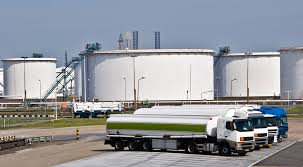
The LPG supply chain in Nigeria consists of upstream production and importation, storage at coastal and inland depots, distribution by bulk marketers, and final delivery to consumers through retail outlets. While supply has improved in recent years, the downstream retail segment remains underdeveloped in many parts of the country, creating gaps in accessibility and distribution. This situation provides a strategic entry point for investors to establish well-structured, safe, and efficiently managed LPG retail facilities.

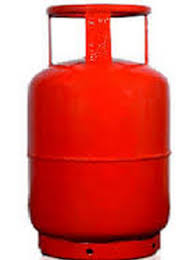
The proposed LPG retail business involves the installation of a gas plant equipped with pressurized storage tanks, dispensing units, and safety systems for the sale of LPG to end-users. Depending on the scale of investment, storage capacity may range from 5 to 20 metric tonnes, allowing the business to serve both retail consumers and small commercial buyers. The operation will source LPG from major marketers and depots, store it under regulated conditions, and sell it in cylinders of various sizes.

A key success factor for the business is location. Establishing the plant in high-density residential areas, emerging urban centers, or busy commercial districts ensures consistent customer traffic and high product turnover. In addition to gas refilling, the business can generate supplementary income through the sale of gas cylinders, burners, regulators, and related accessories, further enhancing profitability.

Financially, the LPG retail business offers strong and stable returns due to its recurring demand and relatively predictable market dynamics. The business benefits from quick inventory turnover, steady cash flow, and the essential nature of its product. With efficient operations, adherence to safety standards, and effective supply management, investors can achieve a favorable return on investment within a short to medium-term period.

Beyond profitability, the business aligns with national priorities focused on promoting clean energy, reducing deforestation, and improving public health. Increased LPG adoption helps to minimize the environmental impact of biomass fuel use and reduces the health risks associated with indoor air pollution. Furthermore, the establishment of LPG retail outlets contributes to job creation and supports the growth of Nigeria’s domestic gas economy.

Establishing an LPG retail business in Nigeria is a highly viable, scalable, and future-focused investment opportunity. With strong demand fundamentals, an expanding consumer base, and supportive policy direction, the business is well-positioned to deliver sustainable returns while contributing to the country’s energy transition and economic development.

Table of Contents

EXECUTIVE SUMMARY 1.0    Business Overview 1.1 Description of the Business 1.2 Vision and Mission Statement 1.3 Business Objective 1.4 Value Proposition 1.5 Critical Success Factor of the Business 1.6 Current Status of Business 1.7 Description of the Business Industry 1.8 Contribution to Local and National Economy 2. Marketing Plan 2.1 Description of product 2.2 Product Packaging and delivery 2.3 The Opportunity 2.4 Pricing Strategy 2.5 Target Market 2.6 Distribution and Delivery Strategy 2.7 Promotional Strategy 2.8 Competition 3. Production Plan 3.1 Description of the Location 3.2 Raw Materials 3.3 Production Equipment 3.4 Production Process 3.5 Production Cost 3.6 Stock Control Process 3.7 Pre-Operating activities and expenses 3.7.1 Operating Activities and Expenses 3.8 Project Implementation Schedule 4.0 Organizational and Management Plan 4.1 Ownership of the business 4.2 Profile of the promoters 4.3 Key Management Staff 4.3.2 Management Support Units 4.4 Details of salary schedule 5. Financial Plan 5.1 Financial Assumption 5.2 Start Up Capital Estimation 5.3 Source of Capital 5.4 Security of Loan 5.5 Loan Repayment Plan 5.6 Profit and Loss Analysis 5.7 Cash flow Analysis 5.8 Viability Analysis 6.0 Business Risks and Mitigation Factors 6.1 Business Risks 6.2 SWOT Analysis

Project Specification:

Plant Capacity: 20 tons per day
Capacity Utilization: Eighty percent (80%)
Loan Tenor: Sixty (60) Months
Interest Rate: Twenty-five percent (25%)
Moratorium: Twelve (12) months

Additional Info

Category:
Report Type: feasibility report
Formats of Delivery:
No. of Pages: 60 pages (text part) & 6 pages (excel part)
Report Code: fora/2026/subnsplies/51074
Publisher: Foraminifera Market Research Limited
Price: ₦150,000
Release Date: 23 Mar, 2026 Updated quarterly.
Language: English
Delivery time: Within twenty-four (24) hours.

Get this Report

Direct bank transfer

To order the report, Please do pay the sum of ₦150,000 into

Bank Name : Eco Bank Plc
Account Name : Foraminifera Market Research Ltd
Account Number : 274 20 569 37
Bank Name : United Bank for Africa (UBA)
Account Name : Foraminifera Market Research Ltd
Account Number : 101 76 603 95
Bank Name : Guaranty Trust Bank Plc (GTB)
Account Name : Foraminifera Ventures
Account Number : 011 66 066 32

Make your payment directly into our bank account. Please use your Order ID as the payment reference. Your order will not be shipped until the funds have cleared in our account.

Instructions

After payment call us on 01 -29 52 413 / 08033782777 or email us at foraminiferamarketresearch@yahoo.com with the payment details. After payment confirmation, the soft copy of the report would be sent to you within 24 hours.